Your Skin Is Trying to Tell You Something. Are You Listening?

Have you ever noticed a sudden breakout in a specific area of your face and wondered why it keeps happening? It turns out, your skin might be trying to tell you something! Acne and other skin conditions can sometimes be linked to certain lifestyle choices, products, or even underlying health issues. By paying close attention to your skin’s signals, you can identify potential causes and take action before the problem worsens.
Have you ever noticed a sudden breakout in a specific area of your face and wondered why it keeps happening? It turns out, your skin might be trying to tell you something! Acne and other skin conditions can sometimes be linked to certain lifestyle choices, products, or even underlying health issues. By paying close attention to your skin’s signals, you can identify potential causes and take action before the problem worsens.
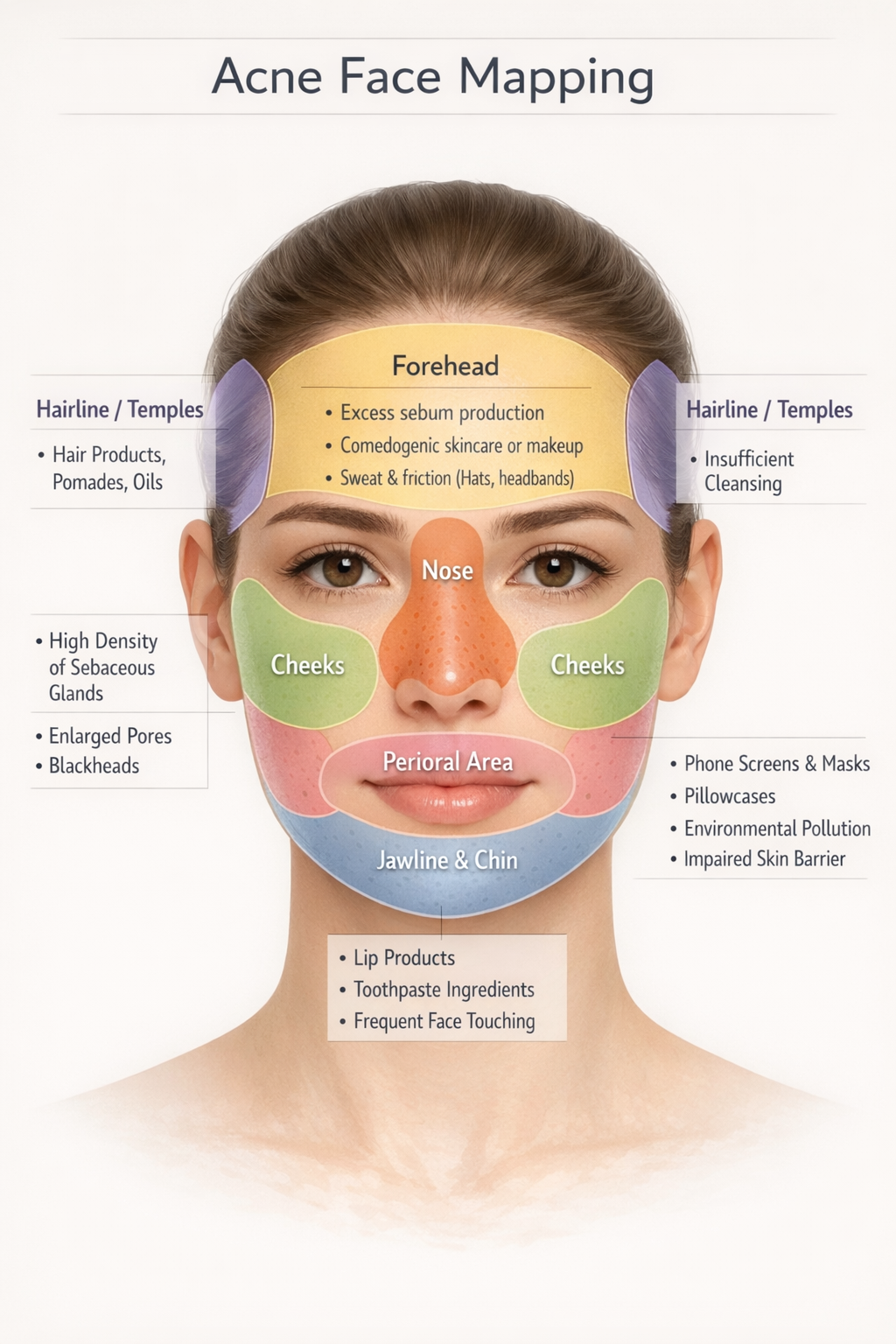
One popular way to decode what your skin might be saying is through Acne Face Mapping, a method that links different areas of your face to specific health or skincare concerns. Let’s dive into the different zones and what acne in each region could indicate.
1. Hairline / Temples
Possible Causes:
- Hair products, pomades, oils: These can clog pores, leading to breakouts along your hairline.
- Insufficient cleansing: Not thoroughly cleansing your face and hairline can result in build-up of oils, sweat, and dirt.
- Sweat & friction: Wearing hats or headbands can cause irritation and clogged pores along the hairline.
What to Do: Try switching to non-comedogenic hair products and make sure to wash your face and hairline area thoroughly, especially after wearing hats or exercising.
2. Forehead
Possible Causes:
- Excess sebum production: Hormonal changes, stress, or diet can lead to increased oil production on the forehead.
- Comedogenic skincare or makeup: Using products that clog pores, like heavy creams or foundations, can exacerbate forehead acne.
- Sweat and friction: Constant touching of your forehead or wearing tight hats or headbands can lead to breakouts.
What to Do: Keep your forehead clean and avoid heavy makeup or skincare products. Consider using oil-free or gel-based moisturizers and makeup to help control oil production.
3. Nose
Possible Causes:
- High density of sebaceous glands: The nose tends to produce more oil, which can lead to clogged pores and blackheads.
- Enlarged pores: Genetics and environmental factors can make your pores appear larger and more prone to clogging.
What to Do: Use a gentle exfoliator to keep pores clear and consider products with salicylic acid that can penetrate and clean out clogged pores.
4. Cheeks
Possible Causes:
- Environmental pollution: Dirt, dust, and pollution can easily settle on the cheeks and clog pores.
- Phone screens & masks: The pressure and friction from phone screens and wearing face masks can lead to acne along your cheek area.
What to Do: Make sure to clean your phone and wash your face after wearing a mask. Avoid resting your face on your phone or hands to reduce friction.
5. Perioral Area (Around the Mouth)
Possible Causes:
- Lip products: Some lip balms, glosses, or lipsticks can contain oils or fragrances that clog pores.
- Toothpaste ingredients: Certain ingredients in toothpaste, like sodium lauryl sulfate, can irritate the skin around your mouth and cause breakouts.
- Frequent face touching: Touching your face with dirty hands can transfer bacteria and oils to the skin, leading to acne around the mouth.
What to Do: Use non-comedogenic lip products and switch to a toothpaste without harsh ingredients. Also, make an effort to avoid touching your face too often.
6. Jawline & Chin
Possible Causes:
- Hormonal imbalance: Acne along the jawline and chin is often linked to hormonal changes, such as during menstruation, pregnancy, or due to PCOS (Polycystic Ovary Syndrome).
- Impaired skin barrier: A weakened skin barrier can cause irritation and breakouts along the jawline.
- Diet & lifestyle: Dairy, sugar, or processed foods can sometimes trigger breakouts in the chin and jawline area.
What to Do: If you’re experiencing hormonal acne, consider speaking to a healthcare provider. Use gentle skincare products and avoid harsh treatments that could irritate your skin barrier. Maintain a balanced diet and consider limiting dairy or high-sugar foods.
Final Thoughts
Your skin is your body’s largest organ, and it communicates with you every day. By paying attention to these acne face mapping zones and their underlying causes, you can make adjustments to your skincare routine and lifestyle to keep your skin clear and healthy. So, next time you see a breakout, remember: your skin is trying to tell you something. Are you listening?